
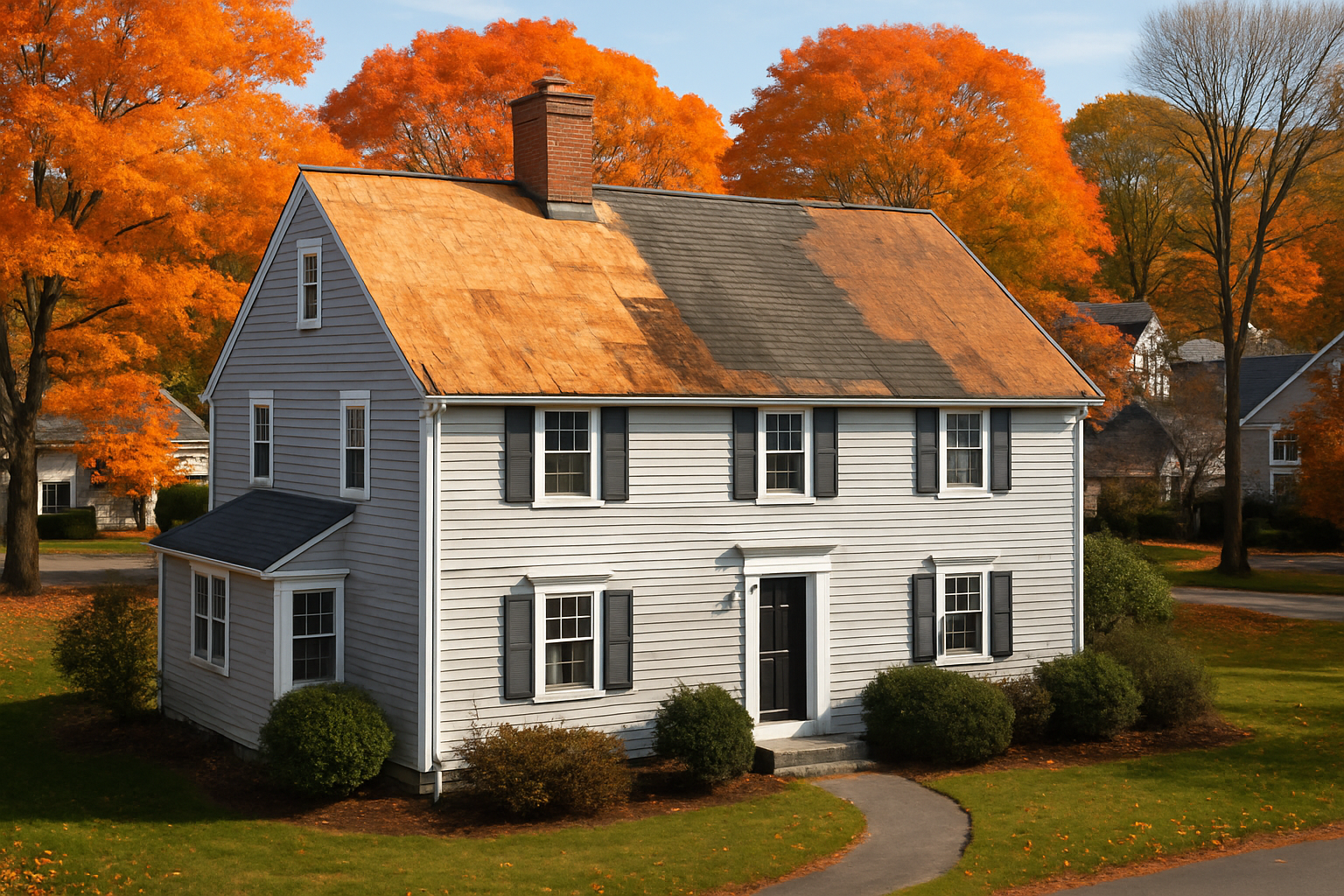
Roof decking damage often hides beneath old shingles. North Shore Roofing MA explains the risks and why a full inspection matters. Call (978) 977-3816.
When homeowners on the North Shore of Massachusetts schedule a roof replacement, they often expect the process to be straightforward — remove the old shingles, install the new ones, and call it done. What many don't anticipate is what our crews frequently discover once those shingles come off: roof decking damage that was completely invisible from the surface. As a locally owned and operated roofing contractor serving the North Shore, we've seen this scenario play out on countless projects, and understanding why it happens can save homeowners from being caught off guard.
Roof decking, also called roof sheathing, is the layer of plywood or oriented strand board (OSB) that sits beneath your shingles and serves as the structural foundation of your entire roofing system. Everything above it depends on it being solid, flat, and intact. When roof decking damage occurs, it compromises the very base that holds your shingles, underlayment, and fasteners in place — yet from the outside, a roof with severely deteriorated decking can look almost identical to a healthy one.
The reason this damage stays hidden for so long comes down to how roofing systems are layered. Shingles and underlayment act as a barrier that conceals what's happening underneath. Water infiltration — whether from a slow leak around flashing, a cracked shingle, or inadequate ventilation causing condensation — can saturate the decking over months or even years without producing obvious interior staining or visible exterior symptoms. By the time a homeowner notices a soft spot on the roof or a sagging section, the deterioration is often widespread. In many cases, we find rotted or delaminated decking sections only after the old shingles have been stripped away and we can inspect the surface directly.
In New England, the climate accelerates this problem significantly. The North Shore experiences freeze-thaw cycles through the winter, heavy rainfall in spring and fall, and humid summers — all of which create persistent moisture stress on roofing materials. Ice dams, a common winter hazard in Massachusetts, can force water beneath shingles and directly onto the decking, where it sits and slowly degrades the wood. Homes with inadequate attic ventilation are especially vulnerable because moisture from inside the living space migrates upward and condenses against the cold underside of the decking, softening it from below while the exterior appears perfectly normal.
OSB decking, which became standard in residential construction from the 1990s onward, is particularly susceptible to moisture damage. Unlike traditional plywood, OSB can swell, delaminate, and lose structural integrity when exposed to prolonged moisture without showing obvious external signs. When we find compromised sections during a replacement, those areas must be cut out and replaced with new sheathing before a single new shingle goes down. Attempting to install a new roof over damaged decking is a mistake that will shorten the life of the new roof and create ongoing structural problems — which is exactly why this work should never be treated as a DIY project.
This is also one of the key reasons we strongly advise North Shore homeowners against simply layering new shingles over old ones, a practice sometimes called a roof-over. When shingles are added on top of existing shingles without stripping the roof, the decking beneath is never examined, and any hidden damage continues to worsen beneath two layers of roofing material. A proper tear-off and full inspection of the decking is the only way to ensure your new roof is built on a sound foundation.
Fall is an important time to think about this. With winter approaching on the North Shore, any undetected roof decking damage left in place becomes a liability as ice, snow loads, and freeze-thaw cycles put additional stress on an already weakened structure. A compromised roof system also drives up heating costs through the cold months, compounding the long-term cost of delayed action.
If your roof is aging or you have any reason to suspect moisture has been working its way into your home, don't wait until a replacement is already underway to find out what's underneath. Contact North Shore Roofing MA today at (978) 977-3816 to schedule your free inspection. We'll give you an honest, thorough assessment of your roof's condition — including the decking — so you know exactly what you're working with before any project begins.
Need Help With Your Roof?
Our experienced roofing team serves the North Shore and surrounding areas — inspections, repairs, and full replacements.